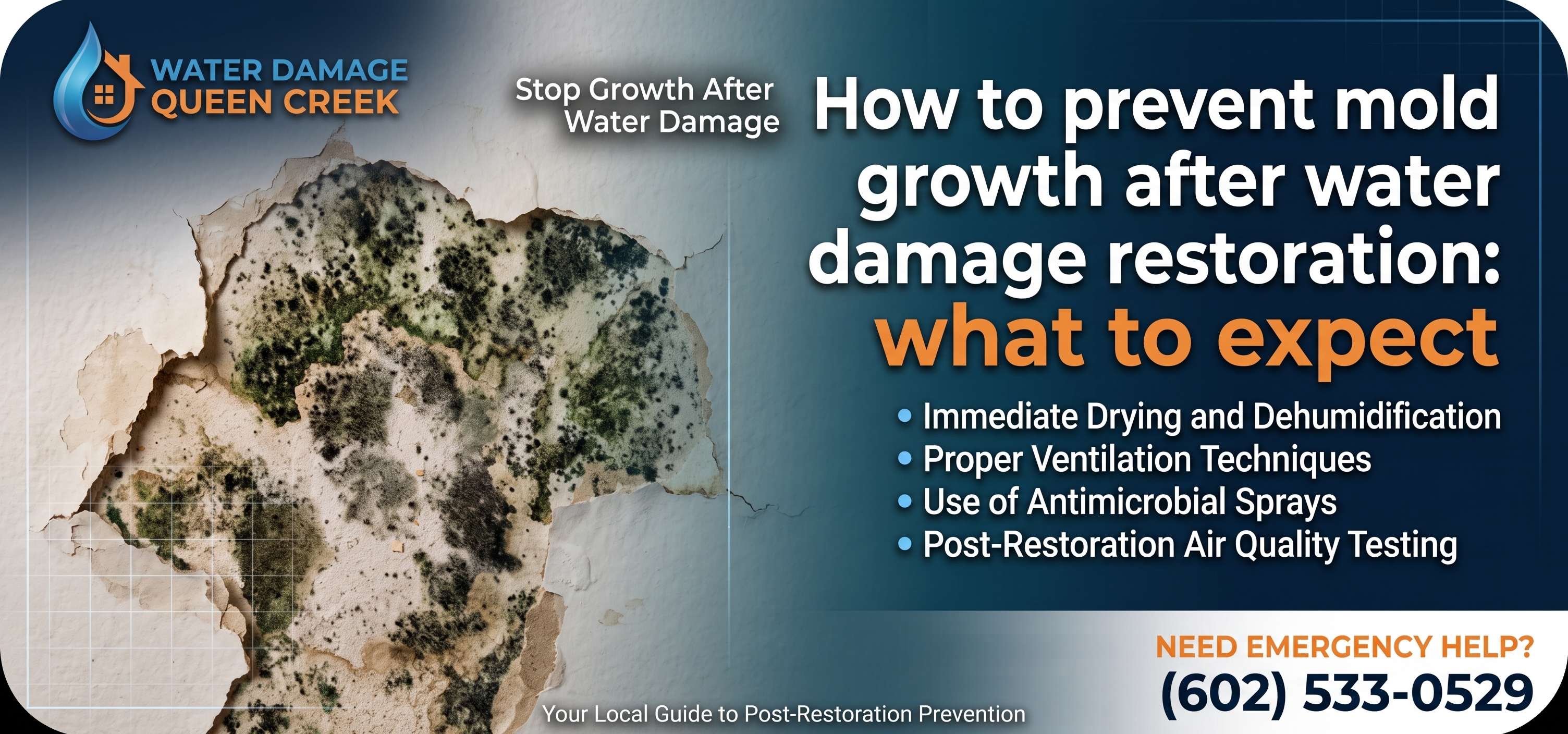
Water damage can lead to serious issues in your home, with mold growth being one of the most concerning. Preventing mold growth after water damage restoration is crucial for maintaining a healthy living environment. In this article, we'll discuss the causes of mold, immediate actions to take after water damage, best practices for prevention, and when to seek professional help in Queen Creek.
Understanding Mold Growth
Mold thrives in damp, warm environments, making homes affected by water damage particularly vulnerable. In Queen Creek, where humidity can fluctuate, understanding the factors that contribute to mold growth is essential.
- Moisture: Mold spores require moisture to grow. Any water left behind after a leak or flood can create a breeding ground.
- Temperature: Mold prefers temperatures between 77°F and 86°F, which are common in many homes.
- Food Source: Mold feeds on organic materials such as wood, drywall, and fabric.
Immediate Actions After Water Damage
Taking swift action after experiencing water damage is critical. Here are steps you should follow:
- Stop the Source: Immediately address the source of the water damage. Whether it's a burst pipe or a leaking roof, stopping the flow is your first priority.
- Remove Standing Water: Use pumps or wet vacuums to remove standing water. For extensive damage, consider hiring emergency water damage restoration in Queen Creek.
- Dry the Area: Open windows and use fans to circulate air and promote drying. Dehumidifiers can also help reduce moisture levels.
Best Practices for Preventing Mold
Once the immediate water issue is addressed, it's time to implement strategies to prevent mold:
- Regular Inspections: Routinely check for leaks in plumbing, roofs, and basements. Early detection can prevent larger issues.
- Ventilation: Ensure proper ventilation in areas prone to moisture, such as bathrooms and kitchens. Install exhaust fans if necessary.
- Use Mold-Resistant Products: When renovating, consider using mold-resistant drywall and paints.
- Maintain Indoor Humidity: Keep indoor humidity levels below 60%. Use dehumidifiers in areas with high humidity.
- Professional Services: Consider dehumidification services in Queen Creek to maintain optimal moisture levels in your home.
Common Mistakes to Avoid
Many homeowners unknowingly make mistakes that can lead to mold growth:
- Ignoring Small Leaks: Even small leaks can lead to significant mold issues if not addressed promptly.
- Neglecting Ventilation: Failing to ventilate areas can trap moisture and create ideal conditions for mold.
- Not Using Mold Inhibitors: If you've experienced water damage, not using mold inhibitors in your restoration process can lead to future problems.
When to Call a Professional
If you notice signs of mold or if the water damage is extensive, it's time to call a professional. QC Restoration Pros specializes in mold remediation in Queen Creek and can help ensure your home is safe and mold-free. They can assess the damage, provide effective solutions, and help you restore your home to its original condition.
Frequently Asked Questions
What causes mold growth after water damage in Queen Creek?
Mold growth is primarily caused by moisture left behind after water damage. If not properly dried and treated, the conditions become ideal for mold spores to thrive.
How can I prevent mold in my Queen Creek home?
To prevent mold, ensure proper ventilation, control indoor humidity, and conduct regular inspections for leaks. Quick action after water damage is also crucial.
What are the best mold prevention methods in Queen Creek?
Some of the best methods include using mold-resistant materials, maintaining low humidity levels, and utilizing professional services for water damage restoration and dehumidification.
How long does it take for mold to grow after water damage?
Mold can start to grow within 24 to 48 hours after water damage if the conditions are right. This highlights the importance of immediate action.
Can I remove mold myself?
While small patches of mold can be cleaned with proper precautions, extensive mold issues should be handled by professionals to ensure complete removal and prevent recurrence.